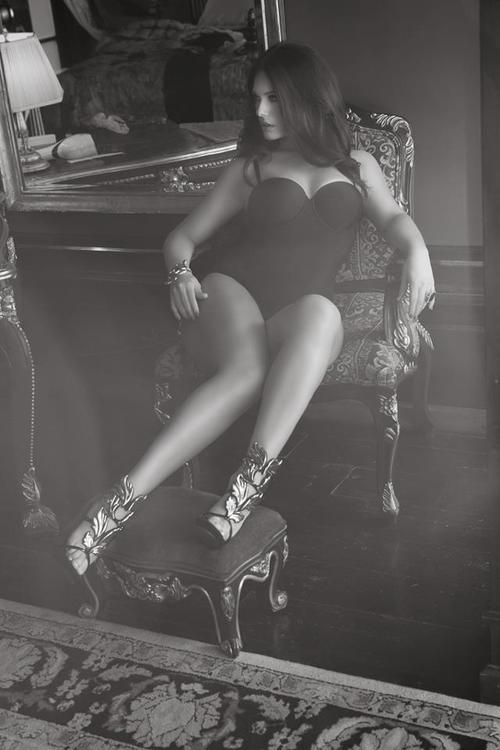
A Note about "Fantasy" that we see in Magazines, TV Commercials, on the Runway, etc..
by Carol-Anne Blackwell
A.K.A. Models ·
.
The easiest way to explain the "Fantasy" of what we see in Commercial Ads and Couture Shows is to think about what you're NOT seeing.
■Everyone is just play-acting a role whether they are looking like "the-girl-next-door" or an object of artistic beauty. Take away their styling and they are just people with the same fears and issues like everyone else. That truth is not a "Fantasy", so when models are looked at as having an easy or "not-a-real" job, they should be re-evaluated for the endurance they need to show to overcome the industry's many quirks, standards, and "unwritten" rules.
■The industry requires constant, demanding expectations of their time, money, and an "always subjective" taste in how they choose a model. Advertisers wouldn't use models if there wasn't some sort of Fantasy or Implied Image required, so it's acceptable for the consumer to be convinced that even though they may personally think lowly of models in general...they still are affected by the images the models are selling.
■Knock the modeling industry, but they're just doing the job that clients want and the image that the consumer is drawn to. So, my dear consumers...if you don't like the images that you see, stop blaming the model. Experience shows that models become pawns when it comes to what "types and sizes" that the client wants to represent their product, service, etc.
■Sometimes, even the models don't see that "BIG PICTURE", either, that it is a BUSINESS. When they first start their careers, it's usually just about the fantasy of seeing themselves at photoshoots, in print, walking on a runway, becoming a supermodel, etc.
■If they stick around long enough as a model...they'll see the reality of what their own "Fantasy" was compared to what the reality of modeling truly is, too. The ones that endure are the ones that just keep pushing through the detours...and just make the best of it.
■So, my dear models...good attitudes plays a HUGE role! Respect yourselves and you're less likely to have the pressures affect your self-esteem.
■Stay memorable without ruining your reputation and that increases your chances of staying in the industry.
■You never know who is watching.
Monday, May 7, 2012
Wednesday, August 3, 2011
Exploring Requirements And Opportunities As a Parts Model
In commercial advertising, editorial, and artistic photography, sometimes you will not see the entire model in full body view, but rather, just isolated parts such as beautiful hands, lips, feet, legs, back, neck, shoulders, etc. These models must treat their specialized parts with care to maintain a "ready-to-work" state for upcoming bookings. There are many types of models in the fashion industry, but this is open to those that have great body "parts" that meet the industry's requirements and high standards. This type of specialty is NOT for just anyone that thinks that it's easy.
For example, beautiful hands and feet need to be groomed well with frequent manicures and pedicures including proper moisturization so that they stay consistently groomed. These models know that their specialized parts are their way to make money, so they invest the extra effort into their livelihood. This also includes perhaps wearing gloves, booties, or anything that helps protect their part that is considered their specialty. There are many tendencies toward extreme protection from harsh or damaging elements.
The body part that is modeled should be well toned and defined with great skin, but without markings such as tattoos, piercings, fake nails, sunburned skin, dark suntans, scars, cuts, acne, cellulite, varicose veins, razor burn, stubble, or excessive hair. The model can't just expect expensive and timely photo retouching for their imperfections to be modified. Genetics can only go so far before a model's flaws are truly discovered, so it's best to stay realistic and make the most out of what their body is. Certain procedures for attaining the best physique can help, but some may certainly make things worse, so leave it to the professionals to tell you your options for skin-care, hair removal, personal grooming, etc.
In the major modeling markets such as NYC there are specialized agencies for "Parts" modeling (please refer to info at the end of article for the one that I highly recommend). In smaller and secondary modeling markets there may not be such a specialty division, so a full-service modeling agency will use its commercial models that represent the finest example of the best needed body part required for the booking. In the larger markets, the specialized agencies will deal with major catalog, television commercial bookings, as well as editorial print bookings, because there is a large demand versus smaller cities (secondary markets). The pay rate may range from just a few hundred to a few thousand dollars depending on client and their usage of the model's part.
We mentioned that proper maintenance is required to keep body parts smooth and healthy in appearance, but the model must have the commercially desired shapes and lengths of the showcased body parts to maximize its' photogenic quality in print (& television). For example, long fingers and toes photograph well. Some feet models have had an average shoe size of 6 to size 8...and that's not a typical shoe size of a model that's 5'10", so there is availability for all different types of models to work if they find their niche. This is also a way for a model to extend their career.
Now, the next step after a model discovers that they have the ideal parts for photography is the ability to know what to do with those parts in front of a camera and while promoting a product. The model needs to use the correct poses that include the advertised product naturally into the photograph. The same principle applies to other body parts such as legs, arms, and the back regarding posing and portraying the advertised product. The key is to make it "look" natural even though the pose may feel exaggerated or awkward.
In specialty parts posing, the story is told by a much smaller area of the body where a model may not be able to rely upon using their eyes and facial expressions, for instance, to show the mood. Subtle movements and changes of little angles can alter whether the body looks natural or oddly distorted. Distortion is something that looks like something is smaller, larger, wider, narrower, or even mis-shaped. The photographer controls a great deal of how a part will look with the angle of their camera, but the model must be aware of the camera placement and keep in mind what the photographer may be seeing versus what they really want you to do.
For instance, here's a little exercise to try. Think about the moment that the camera catches your pose of perhaps your hand. Place and pose your hand in front of you. Look at your hand's pose and position. Pretend that your eyes are the camera and place your hand ABOVE your eye level and carefully adjust the angle a little bit at a time to see how the shape of your hand in enhanced or distorted. If you are able to actually use a digital camera on your own, you'll notice that some poses are more flattering than others. Now, bring your hand down to "eye level" and "lower" to observe how those same flattering poses from above are not as flattering when the camera is from below or at a different angle. The lesson to this tip is to just observe that EVERY angle of your body will appear different in a photographic pose dependent upon WHERE the angle of the camera is. If the model practices and becomes aware of their body's angle and the product placement, the technical aspect should become second nature and the positions can flow during a photo-shoot so that any angle can be optimized with the assistance of the photographer.
A photographer may note to the model how they are seeing the body part's pose and offer suggestions, but it's helpful and more professional if you don't need to be constantly reminded and told what to and not to do. The model learns that it's a combination of posing, angle of camera, and the lighting that places shadows or reflects light in all the right or wrong places. That takes some time, but the model that can learn those tricks can make the most of their ability to be a specialty model. (The same concept is similar for whole body poses, too, but on a grander scale.)
After the model feels that they have what it takes to be photographed and dedicated to the maintenance as a specialty parts model...they'll need some specific pictures of the parts to market themselves to find representation and be professionally presented to clients. Models that already have composite cards in secondary markets may even include them on their updated comp card to feature their specialty. For anyone seeking greater professional opportunities, here's where the next step may lead:
http://www.partsmodels.com/ is a reputable link to find more valuable and specific information from a leading NYC agency (Parts Models), if you are interested. They list their requirements right at their site with other helpful information.
Here's their address:
Parts Models
PO Box 7529 FDR Station
New York NY 10150
(212) 744-6123
For example, beautiful hands and feet need to be groomed well with frequent manicures and pedicures including proper moisturization so that they stay consistently groomed. These models know that their specialized parts are their way to make money, so they invest the extra effort into their livelihood. This also includes perhaps wearing gloves, booties, or anything that helps protect their part that is considered their specialty. There are many tendencies toward extreme protection from harsh or damaging elements.
The body part that is modeled should be well toned and defined with great skin, but without markings such as tattoos, piercings, fake nails, sunburned skin, dark suntans, scars, cuts, acne, cellulite, varicose veins, razor burn, stubble, or excessive hair. The model can't just expect expensive and timely photo retouching for their imperfections to be modified. Genetics can only go so far before a model's flaws are truly discovered, so it's best to stay realistic and make the most out of what their body is. Certain procedures for attaining the best physique can help, but some may certainly make things worse, so leave it to the professionals to tell you your options for skin-care, hair removal, personal grooming, etc.
In the major modeling markets such as NYC there are specialized agencies for "Parts" modeling (please refer to info at the end of article for the one that I highly recommend). In smaller and secondary modeling markets there may not be such a specialty division, so a full-service modeling agency will use its commercial models that represent the finest example of the best needed body part required for the booking. In the larger markets, the specialized agencies will deal with major catalog, television commercial bookings, as well as editorial print bookings, because there is a large demand versus smaller cities (secondary markets). The pay rate may range from just a few hundred to a few thousand dollars depending on client and their usage of the model's part.
We mentioned that proper maintenance is required to keep body parts smooth and healthy in appearance, but the model must have the commercially desired shapes and lengths of the showcased body parts to maximize its' photogenic quality in print (& television). For example, long fingers and toes photograph well. Some feet models have had an average shoe size of 6 to size 8...and that's not a typical shoe size of a model that's 5'10", so there is availability for all different types of models to work if they find their niche. This is also a way for a model to extend their career.
Now, the next step after a model discovers that they have the ideal parts for photography is the ability to know what to do with those parts in front of a camera and while promoting a product. The model needs to use the correct poses that include the advertised product naturally into the photograph. The same principle applies to other body parts such as legs, arms, and the back regarding posing and portraying the advertised product. The key is to make it "look" natural even though the pose may feel exaggerated or awkward.
In specialty parts posing, the story is told by a much smaller area of the body where a model may not be able to rely upon using their eyes and facial expressions, for instance, to show the mood. Subtle movements and changes of little angles can alter whether the body looks natural or oddly distorted. Distortion is something that looks like something is smaller, larger, wider, narrower, or even mis-shaped. The photographer controls a great deal of how a part will look with the angle of their camera, but the model must be aware of the camera placement and keep in mind what the photographer may be seeing versus what they really want you to do.
For instance, here's a little exercise to try. Think about the moment that the camera catches your pose of perhaps your hand. Place and pose your hand in front of you. Look at your hand's pose and position. Pretend that your eyes are the camera and place your hand ABOVE your eye level and carefully adjust the angle a little bit at a time to see how the shape of your hand in enhanced or distorted. If you are able to actually use a digital camera on your own, you'll notice that some poses are more flattering than others. Now, bring your hand down to "eye level" and "lower" to observe how those same flattering poses from above are not as flattering when the camera is from below or at a different angle. The lesson to this tip is to just observe that EVERY angle of your body will appear different in a photographic pose dependent upon WHERE the angle of the camera is. If the model practices and becomes aware of their body's angle and the product placement, the technical aspect should become second nature and the positions can flow during a photo-shoot so that any angle can be optimized with the assistance of the photographer.
A photographer may note to the model how they are seeing the body part's pose and offer suggestions, but it's helpful and more professional if you don't need to be constantly reminded and told what to and not to do. The model learns that it's a combination of posing, angle of camera, and the lighting that places shadows or reflects light in all the right or wrong places. That takes some time, but the model that can learn those tricks can make the most of their ability to be a specialty model. (The same concept is similar for whole body poses, too, but on a grander scale.)
After the model feels that they have what it takes to be photographed and dedicated to the maintenance as a specialty parts model...they'll need some specific pictures of the parts to market themselves to find representation and be professionally presented to clients. Models that already have composite cards in secondary markets may even include them on their updated comp card to feature their specialty. For anyone seeking greater professional opportunities, here's where the next step may lead:
http://www.partsmodels.com/ is a reputable link to find more valuable and specific information from a leading NYC agency (Parts Models), if you are interested. They list their requirements right at their site with other helpful information.
Here's their address:
Parts Models
PO Box 7529 FDR Station
New York NY 10150
(212) 744-6123
Wednesday, June 8, 2011
A Modeling Career - Some Considerations When Seeking Representation With a Modeling Agency
The center of a modeling career focuses on having representation by a modeling agency. There are other ways for unrepresented models to find work, but the role of a modeling agency should be understood by the model to compliment their career. The easiest comparison of a modeling agency is to the role of a specialized employment agency. Their specialty is finding jobs for models (a.k.a. talent) and finding models for jobs (a.k.a. clients). This may sound basically easy, but it's in your best professional interest (as a model or parent) to learn the role that a modeling agency plays in this industry & how it may or may not work for your situation. Don't forget about looking at the "Big Picture" of how it affects all of the agency's models, employees, and their clients.
There are literally hundreds of reputable modeling agencies in the United States. In most states these agencies are governed by laws of their state and must be licensed as a private employment agency. Even their employees working in their agency may be required to be licensed, too. This is best for your overall personal and business protection. You should find out your state's requirements because they certainly vary from state to state. There are standards that the agency must submit to in these cases such as being bonded, business background and financial checks, and copies of forms and contracts that will be utilized by the agency. This manner of screening also assists in weeding out some of the people involved in scams and poor moral business practices that just keep changing business names to stay ahead of their shady pasts.
Another requirement for an agency needing a license is if it is in the business of working with unions like SAG (Screen Actor's Guild) and AFTRA (American Federation of Radio and Television Artists). These are the industry standards for models and actors, and an agency will be franchised as such usually quite clearly. There are other associations such as Better Business Bureau (BBB), that can be a resource for seeing if there have been a lot of complaints and unsettled disputes with an agency. These sources can give you a general idea to whether or not this agency is reputable in the way it is accountable to its business practices.
Now, after that initial prerequisite to look into and/or understand, here's the next dimension to appreciate. Where is the agency? What is that city's "market"? For example, how many and what kinds of clients are in its market? Are they Fashion clients? Are they Commercial clients? The market is a reflection of the kind of work that an agency may be likely to offer its models. (Current trends for markets throughout the United States and International markets and the role your modeling agency can play in your diverse representation is also what a model needs to consider.)
A modeling agency can range from very small to very large, and even the types of models that an agency specializes in representing can be just as unique, so with that said, they know what they are looking for. People outside of this industry may think, "How hard is it to find a model?" Well, there are many ways that agencies see potential models, but they evaluate a model's potential dependent upon how much money they anticipate that model earning while at their agency. The agency knows who their clients tend to be, and how many similar models they may have, so it's a matter of supply and demand.
All modeling agencies have some form of interviewing and evaluating new models, so you can easily find out first by checking their website or calling and asking what their procedure is for accepting new models (ex. Will they be holding any "Open Calls"? Do they want you to just send a picture? etc.). There's usually a time when the agency opens its doors for anyone to come in to be considered for representation. Most agencies will specify when they hold their open calls, or where you can send some snapshots or composite cards of yourself if you live out of their area. There are many other ways that agents can see new models and talent, too, such as referrals from scouts, other models, photographers, modeling conventions, modeling schools, pageants, modeling agencies from other cities, websites, and even clients. Some scouts are actually employed by a specific agency that knows what qualifications that their agency is looking for versus an independent scout that is able to receive a finder's fee (and may even be eligible for a percentage of the model's future earnings). Not every "discovery" is compensated by money, so it depends on the relationship of their association to the agency.
A modeling agency must be very selective to whom they represent. They may see hundreds of models, but there are industry standards that the agency must meet in order to fill their client's needs. This is where your "look", height, size, gender, experience and "market" are considered. The model is part of a group of individuals that work as a team in getting the job done, but there is usually more at stake financially for a client (and agency) when it comes down to either hiring the right model or going through the process of rejecting them. Business is business. Remember, an agency takes a commission out of the model's rate for getting them the job, and they get a fee from the client, too, because they found them the model...(a.k.a. employment agency). Clients are the ones who select the model, so it's in the agent's best interest to find the right models because it's a win-win situation for everyone.
As much as agents are always looking for new talent, there will be different standards of how much one-on-one training will be offered to the models it represents. It is in an agency's best interest to make sure that their models that they are sending out on different jobs are up to par on the most basic requirements needed as a model. Agents can face a public relations nightmare (a.k.a. professional embarrassment) when one of their models represents their agency poorly. Some agencies may have a general manual that they hand out to all of their models that list their policies and standards that they want their models to follow.
It may offer more specific information, but there is a point that an agency may refer new models for photographic testing with certain photographers to further evaluate their abilities in front of a camera. Pictures are a tool that models and agencies use to market themselves, so this is part of the early process.
A model's progress is watched and changes may be suggested by the agents for the model to follow such as losing weight, firming up (losing inches), adjusting hair style or color, improving personality, improving runway walk, and working on becoming more versatile to meet different client's demands in front of the camera, on the runway, or at go-sees (interviews). Some of these things models can practice on their own in front of a mirror, but agencies may be able to ease the transition properly by having different individuals available to give models extra specialized training (usually at the model's expense).
For instance, acting classes can help improve self-expression in front of a camera, on the runway, and auditioning for commercials & film, etc. Having a runway class helps a model be critiqued in ways that a model may not be personally aware of and able to practice and improve. Models may be referred to consultants or classes where make-up artists demonstrate the many different applications of makeup used in the industry and basic skin care, while hair-stylists work in assisting new models with different looks and styling techniques.
Working with testing photographers can assist a model in their movement and help build their confidence in front of the camera, as well as add more photos to their portfolio and offer their agency more photos to choose from for their composite cards. These specialized training sessions are at the model's expense and if the agency is really interested in the model, they may be able to advance the cost of service and take it out of the model's future earnings in addition to their commission. There are other fees that modeling agencies may deduct from a model's earnings, if advanced, so be prepared to pay for most of these items:
Printing of Composite Cards (& future updated cards)
Model's Portfolio (a.k.a. your "Book")
Extra Portfolio Books (duplicates held at agency & sent to clients)
Photographic "Testing"
Cost of Magazines that include "Tear Sheets" (& multiple copies for duplicate books)
Specialized Modeling Classes (mentioned above)
Shipment/Messenger Service/Fax (if used to expedite your Book to clients, etc.)
Model's Bag & Included Specialized Items
Agency Poster or Book (a.k.a. Head Sheet) or Website profile
Rent for Model's Housing
Passport (& Travel when not paid for by Client)
It is extremely important to maintain your own ledger for documenting these expenses including the amount of commission that comes out of your earnings. You are considered a "contract employee" or "independent contractor" and you will be responsible for paying your own taxes because it is NOT deducted in your pay. The "plus" is that you may claim most of these mentioned expenses (plus more miscellaneous expenses) on your tax forms as deductions (you MUST follow your state's requirements).
A special note to be added regarding any "advanced" services provided by a modeling agency on the model's behalf is that the model should "thoroughly" understand what their contract covers and how liable they are for compensating their advances if the contract is terminated. (Surprise!)
Now, after mentioning "Advances", don't be surprised if an agency doesn't offer advances. The ones that do advance tend to be larger and located in busy modeling markets. Sometimes, they will advance the models that they feel have the greatest potential for future earnings, but not others that they are not quite as sure about. The reality is that an agency is a separate business entity than the model, but it needs both models and clients to succeed financially. This is again why agencies are so selective and tougher on their models that they choose to represent.
Agencies work very hard in promoting "most" of their models, and often they are the ones fighting on your behalf, so it can lead them to be more frustrated when models don't listen to them and don't respect their advice. Open communication is important. Many agents are former models and related industry professionals, so they can usually relate to new models, but they cannot work miracles promoting a model that doesn't even help promote themselves in a positive way! Arrogance is different from "attitude", too, so keep a confident "attitude" with your agency, but leave cockiness, arrogance, and entitlement outside of modeling.
Now, if you are doing everything that your agent has asked of you... give them a little time to market you and find out what clients are saying about you... if you aren't being called by the agency for bookings it may that the client is looking for a different look. Modeling is a business, so try to continue to conform to what clients in your market are looking for. If you just are not getting calls from your agency and you've really given them a fair amount of time and reasonable effort to do what they have requested on your behalf... try looking elsewhere to places where you have heard positive feedback from other working models. Be prepared for negative comments regarding competition between modeling agencies... it's not uncommon for a little drama. Just make sure what your contract states for legal purposes...you should know this before you even sign it.
Agencies want to deal with models that are responsible and easy to communicate well with. Agencies are fast acting businesses that require a lot of communication between its employees, models, clients, and everyone in-between. Some of the people involved with the operation of a basic modeling agency are Scouts, Bookers/ Receptionist, Experienced Bookers including Rate Negotiation, & Directors of Different Divisions.
Good luck & remember that modeling is a BUSINESS rather than just a hobby when you are with a modeling agency. You are in control of your business as a model, so be the best that you can be. If you're not with the right agency...move on. If you are not the right model for them... they will not even sign you, so it goes both ways. Sometimes, both model and agent need to put in a little more effort working together, so you can only be responsible for your end...
Search Amazon.com for modeling agency
Search Amazon.com for fashion models
There are literally hundreds of reputable modeling agencies in the United States. In most states these agencies are governed by laws of their state and must be licensed as a private employment agency. Even their employees working in their agency may be required to be licensed, too. This is best for your overall personal and business protection. You should find out your state's requirements because they certainly vary from state to state. There are standards that the agency must submit to in these cases such as being bonded, business background and financial checks, and copies of forms and contracts that will be utilized by the agency. This manner of screening also assists in weeding out some of the people involved in scams and poor moral business practices that just keep changing business names to stay ahead of their shady pasts.
Another requirement for an agency needing a license is if it is in the business of working with unions like SAG (Screen Actor's Guild) and AFTRA (American Federation of Radio and Television Artists). These are the industry standards for models and actors, and an agency will be franchised as such usually quite clearly. There are other associations such as Better Business Bureau (BBB), that can be a resource for seeing if there have been a lot of complaints and unsettled disputes with an agency. These sources can give you a general idea to whether or not this agency is reputable in the way it is accountable to its business practices.
Now, after that initial prerequisite to look into and/or understand, here's the next dimension to appreciate. Where is the agency? What is that city's "market"? For example, how many and what kinds of clients are in its market? Are they Fashion clients? Are they Commercial clients? The market is a reflection of the kind of work that an agency may be likely to offer its models. (Current trends for markets throughout the United States and International markets and the role your modeling agency can play in your diverse representation is also what a model needs to consider.)
A modeling agency can range from very small to very large, and even the types of models that an agency specializes in representing can be just as unique, so with that said, they know what they are looking for. People outside of this industry may think, "How hard is it to find a model?" Well, there are many ways that agencies see potential models, but they evaluate a model's potential dependent upon how much money they anticipate that model earning while at their agency. The agency knows who their clients tend to be, and how many similar models they may have, so it's a matter of supply and demand.
All modeling agencies have some form of interviewing and evaluating new models, so you can easily find out first by checking their website or calling and asking what their procedure is for accepting new models (ex. Will they be holding any "Open Calls"? Do they want you to just send a picture? etc.). There's usually a time when the agency opens its doors for anyone to come in to be considered for representation. Most agencies will specify when they hold their open calls, or where you can send some snapshots or composite cards of yourself if you live out of their area. There are many other ways that agents can see new models and talent, too, such as referrals from scouts, other models, photographers, modeling conventions, modeling schools, pageants, modeling agencies from other cities, websites, and even clients. Some scouts are actually employed by a specific agency that knows what qualifications that their agency is looking for versus an independent scout that is able to receive a finder's fee (and may even be eligible for a percentage of the model's future earnings). Not every "discovery" is compensated by money, so it depends on the relationship of their association to the agency.
A modeling agency must be very selective to whom they represent. They may see hundreds of models, but there are industry standards that the agency must meet in order to fill their client's needs. This is where your "look", height, size, gender, experience and "market" are considered. The model is part of a group of individuals that work as a team in getting the job done, but there is usually more at stake financially for a client (and agency) when it comes down to either hiring the right model or going through the process of rejecting them. Business is business. Remember, an agency takes a commission out of the model's rate for getting them the job, and they get a fee from the client, too, because they found them the model...(a.k.a. employment agency). Clients are the ones who select the model, so it's in the agent's best interest to find the right models because it's a win-win situation for everyone.
As much as agents are always looking for new talent, there will be different standards of how much one-on-one training will be offered to the models it represents. It is in an agency's best interest to make sure that their models that they are sending out on different jobs are up to par on the most basic requirements needed as a model. Agents can face a public relations nightmare (a.k.a. professional embarrassment) when one of their models represents their agency poorly. Some agencies may have a general manual that they hand out to all of their models that list their policies and standards that they want their models to follow.
It may offer more specific information, but there is a point that an agency may refer new models for photographic testing with certain photographers to further evaluate their abilities in front of a camera. Pictures are a tool that models and agencies use to market themselves, so this is part of the early process.
A model's progress is watched and changes may be suggested by the agents for the model to follow such as losing weight, firming up (losing inches), adjusting hair style or color, improving personality, improving runway walk, and working on becoming more versatile to meet different client's demands in front of the camera, on the runway, or at go-sees (interviews). Some of these things models can practice on their own in front of a mirror, but agencies may be able to ease the transition properly by having different individuals available to give models extra specialized training (usually at the model's expense).
For instance, acting classes can help improve self-expression in front of a camera, on the runway, and auditioning for commercials & film, etc. Having a runway class helps a model be critiqued in ways that a model may not be personally aware of and able to practice and improve. Models may be referred to consultants or classes where make-up artists demonstrate the many different applications of makeup used in the industry and basic skin care, while hair-stylists work in assisting new models with different looks and styling techniques.
Working with testing photographers can assist a model in their movement and help build their confidence in front of the camera, as well as add more photos to their portfolio and offer their agency more photos to choose from for their composite cards. These specialized training sessions are at the model's expense and if the agency is really interested in the model, they may be able to advance the cost of service and take it out of the model's future earnings in addition to their commission. There are other fees that modeling agencies may deduct from a model's earnings, if advanced, so be prepared to pay for most of these items:
Printing of Composite Cards (& future updated cards)
Model's Portfolio (a.k.a. your "Book")
Extra Portfolio Books (duplicates held at agency & sent to clients)
Photographic "Testing"
Cost of Magazines that include "Tear Sheets" (& multiple copies for duplicate books)
Specialized Modeling Classes (mentioned above)
Shipment/Messenger Service/Fax (if used to expedite your Book to clients, etc.)
Model's Bag & Included Specialized Items
Agency Poster or Book (a.k.a. Head Sheet) or Website profile
Rent for Model's Housing
Passport (& Travel when not paid for by Client)
It is extremely important to maintain your own ledger for documenting these expenses including the amount of commission that comes out of your earnings. You are considered a "contract employee" or "independent contractor" and you will be responsible for paying your own taxes because it is NOT deducted in your pay. The "plus" is that you may claim most of these mentioned expenses (plus more miscellaneous expenses) on your tax forms as deductions (you MUST follow your state's requirements).
A special note to be added regarding any "advanced" services provided by a modeling agency on the model's behalf is that the model should "thoroughly" understand what their contract covers and how liable they are for compensating their advances if the contract is terminated. (Surprise!)
Now, after mentioning "Advances", don't be surprised if an agency doesn't offer advances. The ones that do advance tend to be larger and located in busy modeling markets. Sometimes, they will advance the models that they feel have the greatest potential for future earnings, but not others that they are not quite as sure about. The reality is that an agency is a separate business entity than the model, but it needs both models and clients to succeed financially. This is again why agencies are so selective and tougher on their models that they choose to represent.
Agencies work very hard in promoting "most" of their models, and often they are the ones fighting on your behalf, so it can lead them to be more frustrated when models don't listen to them and don't respect their advice. Open communication is important. Many agents are former models and related industry professionals, so they can usually relate to new models, but they cannot work miracles promoting a model that doesn't even help promote themselves in a positive way! Arrogance is different from "attitude", too, so keep a confident "attitude" with your agency, but leave cockiness, arrogance, and entitlement outside of modeling.
Now, if you are doing everything that your agent has asked of you... give them a little time to market you and find out what clients are saying about you... if you aren't being called by the agency for bookings it may that the client is looking for a different look. Modeling is a business, so try to continue to conform to what clients in your market are looking for. If you just are not getting calls from your agency and you've really given them a fair amount of time and reasonable effort to do what they have requested on your behalf... try looking elsewhere to places where you have heard positive feedback from other working models. Be prepared for negative comments regarding competition between modeling agencies... it's not uncommon for a little drama. Just make sure what your contract states for legal purposes...you should know this before you even sign it.
Agencies want to deal with models that are responsible and easy to communicate well with. Agencies are fast acting businesses that require a lot of communication between its employees, models, clients, and everyone in-between. Some of the people involved with the operation of a basic modeling agency are Scouts, Bookers/ Receptionist, Experienced Bookers including Rate Negotiation, & Directors of Different Divisions.
Good luck & remember that modeling is a BUSINESS rather than just a hobby when you are with a modeling agency. You are in control of your business as a model, so be the best that you can be. If you're not with the right agency...move on. If you are not the right model for them... they will not even sign you, so it goes both ways. Sometimes, both model and agent need to put in a little more effort working together, so you can only be responsible for your end...
Search Amazon.com for modeling agency
Search Amazon.com for fashion models
Wednesday, June 1, 2011
Fashion Industry Debates What Size Models Should Be
"You can't reason with crazy, you can't argue with stupid." Whose quote is this? I saw it as a status on a social networking site. (I'd like to offer credit where credit is due.) Sometimes, we all are guilty of being so sure about something that there was no way anyone could change our mind about a certain topic, but when the situation is reversed and other people are the ones who are acting "crazy" and "stupid"...it's just frustrating.
This point is mentioned because I'm not trying to "be stupid" and debate something that is supposed to be controversial, but when doing research on one of my topics I thought of that quote as I held myself back from commenting on a popular modeling site. I was less than impressed with what, where and how the argument was going amongst some models, photographers, and some other representatives of the fashion industry. Everyone has their own subjective opinion on the topic of beauty, who should be a model, and their role within the fashion industry. Models come in all shapes, sizes, ethnicities, and experience levels, but when you get a bunch of industry professionals together and watch them chat in an open discussion online regarding Plus Size Models...watch out!
Disregarding the term "Plus Size Model" and just mentioning the topic of "Size" is a heated discussion. Some things are currently facts in the modeling industry:
• It's not just for "pretty girl" types or "Ken-doll" males.
• It's not just for the tall and skinny.
• You can be a successful model without being famous.
• Models work for clients and are paid to represent that hired image.
• And EVERYTHING ELSE regarding work ethic, personality, and professionalism is very much the same in the industry no matter what TYPE of model you are.
So, people who argue about the standards of what a REAL model IS should watch what they say as being a FACT that can't be "argued" with. The bottom line is that the CLIENT or people working on behalf of the client are the ones that HIRE THE MODELS. That is a FACT. Whether it is a Fashion Designer, Corporate Commercial Client, Magazine, Photographer, Advertising Agency, etc...they are just some of the people who decide what type of model that they want. It is THEIR standard of how they want their product seen by the consumer. It is their choice.
If a High Fashion Magazine wants a tall, size Zero model for their editorial spread...that's their choice. If they don't attract a large group of consumers to buy their magazine because they alienate a large group of people of size then that's their loss, too, but it's their choice to make their brand exclusive of those consumers that are worldly, trendy, and have money to spend on their advertisers. Sometimes they forget that people over size 8 can be worldly, trendy, and have money, too.
Some of those magazines dabble with smaller Plus Sized models, so again, it is still their choice regarding size. They do it for their own reasons, but it has nothing to do with equality in modeling. Modeling is not an "Equal Opportunity Employer". They are considered contract employees that can usually work for many different clients and are strongly hired on their looks and exposed to physical critique often. There are not too many who care that they work under sometimes harsh conditions, long hours, and no guaranteed 15 minute break or lunch hour, etc. Not many other careers would ever tolerate that intense scrutiny without threats of a lawsuit, but models are exposed to it on a common basis. With that said, there still can be a passion from models that enjoy what they do. Many models have a tendency to weed themselves out of the industry especially when they are not prepared about how the business works, don't find their niche, or don't make enough money and become frustrated with the industry.
Above and beyond some questionable conditions that the models are exposed to they still do it and do their personal best. If they don't, they won't last long complaining to "the boss". Modeling is a choice for the individual, so if the good doesn't outweigh the bad most of the time...maybe it's not the right career. Models may be the center of attention, but they are not the ones that make significant change in the industry without a client giving them that chance to shine. The same choices hold true for whether or not a Fashion Designer is represented during a Fashion Week by Plus Size Models to show their line of Plus garments on the runway. Heck, many designers don't even have Plus Size designs. They will hire whoever shows their garments in the best way. Some designers see the consumer demand for larger sizes being represented in fashion, but only a few are truly inspired by designing for this group.
Over the past decades, the industry standards regarding High Fashion modeling sizes have trickled down from size 4/6 down to 0/2. The same decline in size of Plus models from Size 14/16 down to even size 8 shows the same trend that smaller sizes and body angles that photograph well are still sought after. Models are human mannequins, or rather human "hangers", so it's their job to sell it. Note: Some designers simply don't have the creative motivation or talent to develop flattering garments in larger sizes. That's not their fault if they don't have the passion to create specific garments fitted to an average to plus sized individual. The artistic eye within the modeling industry can have a distorted view of themselves and the things that they consider flaws in others.
Regardless, models of both smaller ends of these size ranges can be hired to represent their clients, but the other left out sizes of plus models and consumers debate this as unfair. I've seen their argument, too, and they are just as willing to argue and demand respect, but many Plus Models take it personally when they are overlooked for a smaller model. It can be discouraging for ANY model that believes that they deserved the booking that some other model got. That alone is a common experience that all eventually face, so whether they are Size 2/4/6 or Size 12/14/16...it's up to the client to interpret what they think represents them the best to the consumer. Nothing personal...it's business and the bottom line.
Ultimately, modeling is a subjective career choice, so before the industry makes any drastic changes and raises the size range of models that represent them, everyone must treat this industry as a business. Just being a really good MODEL is not easy, so for those that have that talent, they aspire to finding the right work for their career. Yes, there is an artistic element to many parts of the industry, as well as image, character acting and proper posing techniques, etc., but the role of a career as a model is to be "whatever" the role that the client hires them to be. It's not meant to be a personal insult to you as a person, but rather a lesson in flexibility to go with the flow of what you are hired to do. There are many models that give up or never find their "niche" in the industry, but there's no need for people within the industry or the general public to "pour salt on an open wound" by making people feel that they aren't REAL models just because they are not famous or a Size Zero.
If you are ever in a position to comment, judge, or just read about the industry...please be open-minded that it takes all sizes, looks, ethnicities and types to be in this career. The process can be grueling on a person's self-esteem especially for the long haul as a career choice. Sometimes when you read comments and discussions about some of these industry topics you will see people who are supposed to know what they are talking about because they are models, photographers, etc. themselves. Everyone is entitled to an opinion, but when you see individuals that claim only one way is "right" or one type is "beautiful"...know that "You can't reason with crazy, you can't argue with stupid".
A.K.A. Models is a new online industry trade magazine for models, photographers, designers, stylists, agencies, MUA's, and anyone that seeks to research or contribute to the modeling industry.
Currently featuring FREE on-line tips, information, and opportunities for individuals that are interested in having a career in the modeling industry.
https://www.facebook.com/#!/pages/AKA-Models/205921422771677
This point is mentioned because I'm not trying to "be stupid" and debate something that is supposed to be controversial, but when doing research on one of my topics I thought of that quote as I held myself back from commenting on a popular modeling site. I was less than impressed with what, where and how the argument was going amongst some models, photographers, and some other representatives of the fashion industry. Everyone has their own subjective opinion on the topic of beauty, who should be a model, and their role within the fashion industry. Models come in all shapes, sizes, ethnicities, and experience levels, but when you get a bunch of industry professionals together and watch them chat in an open discussion online regarding Plus Size Models...watch out!
Disregarding the term "Plus Size Model" and just mentioning the topic of "Size" is a heated discussion. Some things are currently facts in the modeling industry:
• It's not just for "pretty girl" types or "Ken-doll" males.
• It's not just for the tall and skinny.
• You can be a successful model without being famous.
• Models work for clients and are paid to represent that hired image.
• And EVERYTHING ELSE regarding work ethic, personality, and professionalism is very much the same in the industry no matter what TYPE of model you are.
So, people who argue about the standards of what a REAL model IS should watch what they say as being a FACT that can't be "argued" with. The bottom line is that the CLIENT or people working on behalf of the client are the ones that HIRE THE MODELS. That is a FACT. Whether it is a Fashion Designer, Corporate Commercial Client, Magazine, Photographer, Advertising Agency, etc...they are just some of the people who decide what type of model that they want. It is THEIR standard of how they want their product seen by the consumer. It is their choice.
If a High Fashion Magazine wants a tall, size Zero model for their editorial spread...that's their choice. If they don't attract a large group of consumers to buy their magazine because they alienate a large group of people of size then that's their loss, too, but it's their choice to make their brand exclusive of those consumers that are worldly, trendy, and have money to spend on their advertisers. Sometimes they forget that people over size 8 can be worldly, trendy, and have money, too.
Some of those magazines dabble with smaller Plus Sized models, so again, it is still their choice regarding size. They do it for their own reasons, but it has nothing to do with equality in modeling. Modeling is not an "Equal Opportunity Employer". They are considered contract employees that can usually work for many different clients and are strongly hired on their looks and exposed to physical critique often. There are not too many who care that they work under sometimes harsh conditions, long hours, and no guaranteed 15 minute break or lunch hour, etc. Not many other careers would ever tolerate that intense scrutiny without threats of a lawsuit, but models are exposed to it on a common basis. With that said, there still can be a passion from models that enjoy what they do. Many models have a tendency to weed themselves out of the industry especially when they are not prepared about how the business works, don't find their niche, or don't make enough money and become frustrated with the industry.
Above and beyond some questionable conditions that the models are exposed to they still do it and do their personal best. If they don't, they won't last long complaining to "the boss". Modeling is a choice for the individual, so if the good doesn't outweigh the bad most of the time...maybe it's not the right career. Models may be the center of attention, but they are not the ones that make significant change in the industry without a client giving them that chance to shine. The same choices hold true for whether or not a Fashion Designer is represented during a Fashion Week by Plus Size Models to show their line of Plus garments on the runway. Heck, many designers don't even have Plus Size designs. They will hire whoever shows their garments in the best way. Some designers see the consumer demand for larger sizes being represented in fashion, but only a few are truly inspired by designing for this group.
Over the past decades, the industry standards regarding High Fashion modeling sizes have trickled down from size 4/6 down to 0/2. The same decline in size of Plus models from Size 14/16 down to even size 8 shows the same trend that smaller sizes and body angles that photograph well are still sought after. Models are human mannequins, or rather human "hangers", so it's their job to sell it. Note: Some designers simply don't have the creative motivation or talent to develop flattering garments in larger sizes. That's not their fault if they don't have the passion to create specific garments fitted to an average to plus sized individual. The artistic eye within the modeling industry can have a distorted view of themselves and the things that they consider flaws in others.
Regardless, models of both smaller ends of these size ranges can be hired to represent their clients, but the other left out sizes of plus models and consumers debate this as unfair. I've seen their argument, too, and they are just as willing to argue and demand respect, but many Plus Models take it personally when they are overlooked for a smaller model. It can be discouraging for ANY model that believes that they deserved the booking that some other model got. That alone is a common experience that all eventually face, so whether they are Size 2/4/6 or Size 12/14/16...it's up to the client to interpret what they think represents them the best to the consumer. Nothing personal...it's business and the bottom line.
Ultimately, modeling is a subjective career choice, so before the industry makes any drastic changes and raises the size range of models that represent them, everyone must treat this industry as a business. Just being a really good MODEL is not easy, so for those that have that talent, they aspire to finding the right work for their career. Yes, there is an artistic element to many parts of the industry, as well as image, character acting and proper posing techniques, etc., but the role of a career as a model is to be "whatever" the role that the client hires them to be. It's not meant to be a personal insult to you as a person, but rather a lesson in flexibility to go with the flow of what you are hired to do. There are many models that give up or never find their "niche" in the industry, but there's no need for people within the industry or the general public to "pour salt on an open wound" by making people feel that they aren't REAL models just because they are not famous or a Size Zero.
If you are ever in a position to comment, judge, or just read about the industry...please be open-minded that it takes all sizes, looks, ethnicities and types to be in this career. The process can be grueling on a person's self-esteem especially for the long haul as a career choice. Sometimes when you read comments and discussions about some of these industry topics you will see people who are supposed to know what they are talking about because they are models, photographers, etc. themselves. Everyone is entitled to an opinion, but when you see individuals that claim only one way is "right" or one type is "beautiful"...know that "You can't reason with crazy, you can't argue with stupid".
A.K.A. Models is a new online industry trade magazine for models, photographers, designers, stylists, agencies, MUA's, and anyone that seeks to research or contribute to the modeling industry.
Currently featuring FREE on-line tips, information, and opportunities for individuals that are interested in having a career in the modeling industry.
https://www.facebook.com/#!/pages/AKA-Models/205921422771677
Thursday, May 5, 2011
WORKING TOGETHER...
Working Together…
There is a special relationship between the model and photographer. Whether the model or photographer has little experience or is a working pro there should be an element of “comfort”. The photographer has many different technical and creative challenges when photographing a model, so the model shouldn’t expect miracles based solely upon leaving everything up to the photographer. The model needs to do more than just stand, sit, or expect constant guidance from the photographer. There should be fluency from both model and photographer, so both parties need to work together.
If the opportunity is available to actually meet the photographer before the actual scheduled photo-shoot…take advantage of it because it allows you to get a feel for what the photographer may be expecting, as well as giving the photographer a sense of your experience via your portfolio. There is not always a chance to meet before a shoot, but just as many models have online portfolios…so do photographers, so you can check out their work and their experience that way.
Part of a photographer’s job is to assist the model in looking their best. It’s not just about only having “nice” pictures to show friends and family…modeling is a business. “Their Best” is however they need to look to book future jobs. The model’s portfolio should be made for ALL of the model’s prospective clients. So, beyond a photographer needing to have the technical skills to master the art of photographing a model, they also need to have the vision and personal skills of offering direction to the model to enhance their poses.
New models often rely on the photographer to guide them into their poses and even experienced models rely on the photographer to maximize their best assets and minimize their flaws. Photographers tend to be “visual” people, so they not only have a concept in their mind, but need to communicate their vision to the model. Not always easy. Sometimes the model understands…while sometimes there is a lack of skill or communication. Regardless, the less frustrated that the photographer gets when they are not getting the result they want…the more likely they will be at assisting the model in achieving “their vision”…or something a little closer. If the model senses that they are doing poorly it can hinder their creativity, too, so at that point…professionally assess what can be done to step up the session and have a positive outcome. (Do this job because you like it most of the time…if not, find another job.)
Stylists can enhance the photo shoot, as well as provide the most professional outcome. They are a team of make-up artists, hairdressers, & photo stylists that work with the photographer and model to achieve that goal that the clients want. Different clients want different looks, so when a model is building a portfolio they want to have the types of photographs that will help them look their best for those prospective clients. This is where a professional team works together and when the results are fantastic…all can receive credit. Not every experience is “fantastic”, but everyone should keep it professional and offer their best work because their name is their individual business reputation.
Word travels through the industry and your reputation is part of your business whether you are a model, photographer, stylist, etc. Pleasing the client is crucial, so always keep in mind who you are working for and keep that vision in mind.
![]() |
Is it all about you?? Think again. |
If the opportunity is available to actually meet the photographer before the actual scheduled photo-shoot…take advantage of it because it allows you to get a feel for what the photographer may be expecting, as well as giving the photographer a sense of your experience via your portfolio. There is not always a chance to meet before a shoot, but just as many models have online portfolios…so do photographers, so you can check out their work and their experience that way.
Part of a photographer’s job is to assist the model in looking their best. It’s not just about only having “nice” pictures to show friends and family…modeling is a business. “Their Best” is however they need to look to book future jobs. The model’s portfolio should be made for ALL of the model’s prospective clients. So, beyond a photographer needing to have the technical skills to master the art of photographing a model, they also need to have the vision and personal skills of offering direction to the model to enhance their poses.
New models often rely on the photographer to guide them into their poses and even experienced models rely on the photographer to maximize their best assets and minimize their flaws. Photographers tend to be “visual” people, so they not only have a concept in their mind, but need to communicate their vision to the model. Not always easy. Sometimes the model understands…while sometimes there is a lack of skill or communication. Regardless, the less frustrated that the photographer gets when they are not getting the result they want…the more likely they will be at assisting the model in achieving “their vision”…or something a little closer. If the model senses that they are doing poorly it can hinder their creativity, too, so at that point…professionally assess what can be done to step up the session and have a positive outcome. (Do this job because you like it most of the time…if not, find another job.)
Stylists can enhance the photo shoot, as well as provide the most professional outcome. They are a team of make-up artists, hairdressers, & photo stylists that work with the photographer and model to achieve that goal that the clients want. Different clients want different looks, so when a model is building a portfolio they want to have the types of photographs that will help them look their best for those prospective clients. This is where a professional team works together and when the results are fantastic…all can receive credit. Not every experience is “fantastic”, but everyone should keep it professional and offer their best work because their name is their individual business reputation.
Word travels through the industry and your reputation is part of your business whether you are a model, photographer, stylist, etc. Pleasing the client is crucial, so always keep in mind who you are working for and keep that vision in mind.
Saturday, April 23, 2011
Viewpoints of a Model's Success
Is your personal success as a model based on just having cool pictures of yourself to show others? Or is that success based solely on how much money you’re making? Well, how about other people in your career and life? How they may view your success can effect you, too. These are some suggestions of how to relate (or empathize) to some of the people that have different roles in your success.
#1 The Modeling Agency’s Viewpoint of your success as a model:
Think like an agent. Are clients going to book you? If you are signed with almost any agency, the bottom line will be how much money you are bringing into their business (or may potentially bring in). Remember this as your first and most important business lesson in your career as a model. Modeling agencies are your pipeline to how you are marketed(promoted) as a model, and they make their money (income) from “percentages” from 1.) the model’s commission and 2.) from the client‘s fee.
The more money that you make as a model in their agency is another dollar in their pocket. So, there’s more involved in the bottom line of how your agent looks at your "potential" as a model. Will clients hire you? They are looking at how much “income” potential you can bring to their business. They must run their business efficiently, and you must do the same in the planning of your career, too. The agency’s role in your representation is that of a glorified “employment agency” that is a go-between for the client and model. The modeling agency works to provide resources to market all of their models, so it’s in their best interest to keep the right variety of models that are in demand.
The ultimate decision is made by the client to which model they want to use, but your agent and booker are your representative and they can sometimes have a strong hand in that process. Do not disrespect them! They know their power and should not be underestimated. Learn all that you can about the way your agency wants to promote you and follow their instructions on things that they need for you to do. This can increase your opportunities for success!
#2. Your Parent’s view of your success as a model:
Parents worry about all of the horror stories that they have heard about over the years. Whether their child is under or over the age of 18...parents are entitled to worry about their children. PERIOD. Some horror stories are really worse than others. Will their child be lured into drugs or pornography? What about nudity? How far will their child travel away from them and who will be responsible for them if they are in a dangerous situation? Will photographers take advantage of their child or manipulate their photos and use them on the Internet without their knowledge? How will their child’s self-esteem hold up against the “industry sharks”? Will their child be required to grow up too fast in order to survive in this industry? What about their education? Why do we have to pay money for our child to pursue a career as a model? (That makes parents skeptical, too!) So many potential questions from a parent's perspective.
A parent’s view of their child’s potential success can leave them with a lot of questions! Most parents are initially so proud that someone thinks that their child should model that they can view that alone as a “proud” success for you. So, don’t be too hard on yourself or your parents if questions arise that need more communication and opens up an opportunity for discussion. Discuss scenarios together and show them that you, too, are trying to do your homework about this industry and want to make safe, mature (professional) decisions. The more that you learn goes a long way with your parents as you break them into your status as being a responsible person and model.
#3. Your “significant other’s” view of your success:
Oh, my! Every model that I spoke to had similar stories about this topic. A close partner’s viewpoint (boyfriend, girlfriend, husband, wife) can really be like an emotional roller coaster on your mind if you’re in a somewhat serious or longer-term relationship. It really can place a lot of strain on relationships and I’ve seen more than a few models just not ready to risk losing someone “that means so much to them” and NOT take the risk of losing them. They said good-bye to their modeling careers.
It’s confusing to both people in a relationship to have unknown fears, so just accept that this can weigh strongly on your decisions that you make during the span of your modeling career. Many models choose to not be in relationships because of the lifestyle that can come along with being a model. It may be a double-standard for you to feel that you have the “Looks” of a model and your partner likes having a “model” as a partner, but only to find out that insecurities, jealousies, and rejections can ruin what you think is a “great” relationship or cut short a promising modeling career.
Regardless of all the potential rejection and criticism that models face over the span of their career from industry professionals and the public, they can sometimes be torn more by their partner’s opinion of them. What choice do you think that you’ll make if your partner is feeling insecure or pressuring you? These are potential issues that can set you up for either success or failure, and not just as a model. Consider your short-term goals and how you can incorporate that path into the “Big Picture” of your future.
#4. Friends’ opinion of your success as a model:
This one is complicated, too. Let’s start with the word “Jealousy”. You want your friends to be happy for you, but you may start to notice that they are treating you differently. Why? You will probably be correct to assume that jealousy is getting the best of most of them, but just also do a double-take on yourself that you may be acting a little different than they are used to you being.
Modeling is entirely a different dimension of reality (versus typical jobs), and you may not necessarily be your “old self” during your career all the time. Depending on the division of models that you fall into, this may really be a good thing “professionally“, but try to be aware of where you need to keep “model-mode” ON and when it can be toned down a few notches. People are friends with each other because they can mutually have something special to offer, but relationships can change if you stop “getting” or “giving” what this relationship needs. Some people are just naturally the center of attention, and if you are a model, that can work for you, but can throw off the balance of some other relationships depending on their personality.
As for petty jealousies from acquaintances (or superficial friends) that are hurtful to your feelings, try to thicken up your emotions to deflect them away from sabotaging your self-esteem and you’ll be in “good practice” for your actual modeling career that faces criticism from the industry and public all the time. The BEST friends are the ones who are there to listen to you vent, keep what you say in confidence, offer their opinion when they see you may need it, and are only a phone call (or Text, or Email) away when you need them for a laugh or a cry!
#5 The public’s view of your success as a model:
There are a lot of models in print, on the runway, doing promotions, etc., but what are their names? Is that how the public view a model’s success? Sometimes. The public really doesn’t know the extent of who or why some models are more famous than others. They just “hear” or “read” who is the next hot thing (flavor of the month) by reading magazines or watching entertainment news shows. Public relations is an art of it’s own when models and celebrities are involved. You may have a successful status as a model in your hometown if the newspaper writes about your local, national, or international ventures as a model (even if you know you are still a “small fish” in the sea of the modeling industry, but still, it‘s a nice perk)!
Being a model places you out there for comments by some brutally opinionated people who either think that their entitled to verbally abuse you or question why you are even a model. Ignorance is not a constructive foundation for you to listen to or even respond to. If there is a shred of truth to the opinion that you are hearing, politely acknowledge and mentally file it away, and work on it next time. You can’t impress everyone, nor should that be your goal. That’s not permission to be rude, but rather respond professionally when considering the source of criticism. I’m going to include the people who hire you into this category because they tend to look for what the public want to see representing their product. Your personality does put the “icing on the cake” when perhaps they are juggling who they want to hire, so how you present yourself publicly to them does matter. Show confidence as often as you can even if you’re faking it!
Is your personal success as a model based on just having cool pictures of yourself to show others? Or is that success based solely on how much money you’re making? Well, how about other people in your career and life? How they may view your success can effect you, too. These are some suggestions of how to relate (or empathize) to some of the people that have different roles in your success.
#1 The Modeling Agency’s Viewpoint of your success as a model:
Think like an agent. Are clients going to book you? If you are signed with almost any agency, the bottom line will be how much money you are bringing into their business (or may potentially bring in). Remember this as your first and most important business lesson in your career as a model. Modeling agencies are your pipeline to how you are marketed(promoted) as a model, and they make their money (income) from “percentages” from 1.) the model’s commission and 2.) from the client‘s fee.
The more money that you make as a model in their agency is another dollar in their pocket. So, there’s more involved in the bottom line of how your agent looks at your "potential" as a model. Will clients hire you? They are looking at how much “income” potential you can bring to their business. They must run their business efficiently, and you must do the same in the planning of your career, too. The agency’s role in your representation is that of a glorified “employment agency” that is a go-between for the client and model. The modeling agency works to provide resources to market all of their models, so it’s in their best interest to keep the right variety of models that are in demand.
The ultimate decision is made by the client to which model they want to use, but your agent and booker are your representative and they can sometimes have a strong hand in that process. Do not disrespect them! They know their power and should not be underestimated. Learn all that you can about the way your agency wants to promote you and follow their instructions on things that they need for you to do. This can increase your opportunities for success!
#2. Your Parent’s view of your success as a model:
Parents worry about all of the horror stories that they have heard about over the years. Whether their child is under or over the age of 18...parents are entitled to worry about their children. PERIOD. Some horror stories are really worse than others. Will their child be lured into drugs or pornography? What about nudity? How far will their child travel away from them and who will be responsible for them if they are in a dangerous situation? Will photographers take advantage of their child or manipulate their photos and use them on the Internet without their knowledge? How will their child’s self-esteem hold up against the “industry sharks”? Will their child be required to grow up too fast in order to survive in this industry? What about their education? Why do we have to pay money for our child to pursue a career as a model? (That makes parents skeptical, too!) So many potential questions from a parent's perspective.
A parent’s view of their child’s potential success can leave them with a lot of questions! Most parents are initially so proud that someone thinks that their child should model that they can view that alone as a “proud” success for you. So, don’t be too hard on yourself or your parents if questions arise that need more communication and opens up an opportunity for discussion. Discuss scenarios together and show them that you, too, are trying to do your homework about this industry and want to make safe, mature (professional) decisions. The more that you learn goes a long way with your parents as you break them into your status as being a responsible person and model.
#3. Your “significant other’s” view of your success:
Oh, my! Every model that I spoke to had similar stories about this topic. A close partner’s viewpoint (boyfriend, girlfriend, husband, wife) can really be like an emotional roller coaster on your mind if you’re in a somewhat serious or longer-term relationship. It really can place a lot of strain on relationships and I’ve seen more than a few models just not ready to risk losing someone “that means so much to them” and NOT take the risk of losing them. They said good-bye to their modeling careers.
It’s confusing to both people in a relationship to have unknown fears, so just accept that this can weigh strongly on your decisions that you make during the span of your modeling career. Many models choose to not be in relationships because of the lifestyle that can come along with being a model. It may be a double-standard for you to feel that you have the “Looks” of a model and your partner likes having a “model” as a partner, but only to find out that insecurities, jealousies, and rejections can ruin what you think is a “great” relationship or cut short a promising modeling career.
Regardless of all the potential rejection and criticism that models face over the span of their career from industry professionals and the public, they can sometimes be torn more by their partner’s opinion of them. What choice do you think that you’ll make if your partner is feeling insecure or pressuring you? These are potential issues that can set you up for either success or failure, and not just as a model. Consider your short-term goals and how you can incorporate that path into the “Big Picture” of your future.
#4. Friends’ opinion of your success as a model:
This one is complicated, too. Let’s start with the word “Jealousy”. You want your friends to be happy for you, but you may start to notice that they are treating you differently. Why? You will probably be correct to assume that jealousy is getting the best of most of them, but just also do a double-take on yourself that you may be acting a little different than they are used to you being.
Modeling is entirely a different dimension of reality (versus typical jobs), and you may not necessarily be your “old self” during your career all the time. Depending on the division of models that you fall into, this may really be a good thing “professionally“, but try to be aware of where you need to keep “model-mode” ON and when it can be toned down a few notches. People are friends with each other because they can mutually have something special to offer, but relationships can change if you stop “getting” or “giving” what this relationship needs. Some people are just naturally the center of attention, and if you are a model, that can work for you, but can throw off the balance of some other relationships depending on their personality.
As for petty jealousies from acquaintances (or superficial friends) that are hurtful to your feelings, try to thicken up your emotions to deflect them away from sabotaging your self-esteem and you’ll be in “good practice” for your actual modeling career that faces criticism from the industry and public all the time. The BEST friends are the ones who are there to listen to you vent, keep what you say in confidence, offer their opinion when they see you may need it, and are only a phone call (or Text, or Email) away when you need them for a laugh or a cry!
#5 The public’s view of your success as a model:
There are a lot of models in print, on the runway, doing promotions, etc., but what are their names? Is that how the public view a model’s success? Sometimes. The public really doesn’t know the extent of who or why some models are more famous than others. They just “hear” or “read” who is the next hot thing (flavor of the month) by reading magazines or watching entertainment news shows. Public relations is an art of it’s own when models and celebrities are involved. You may have a successful status as a model in your hometown if the newspaper writes about your local, national, or international ventures as a model (even if you know you are still a “small fish” in the sea of the modeling industry, but still, it‘s a nice perk)!
Being a model places you out there for comments by some brutally opinionated people who either think that their entitled to verbally abuse you or question why you are even a model. Ignorance is not a constructive foundation for you to listen to or even respond to. If there is a shred of truth to the opinion that you are hearing, politely acknowledge and mentally file it away, and work on it next time. You can’t impress everyone, nor should that be your goal. That’s not permission to be rude, but rather respond professionally when considering the source of criticism. I’m going to include the people who hire you into this category because they tend to look for what the public want to see representing their product. Your personality does put the “icing on the cake” when perhaps they are juggling who they want to hire, so how you present yourself publicly to them does matter. Show confidence as often as you can even if you’re faking it!
Thursday, April 21, 2011
A Little History of Fashion Modeling
"For individuals that have that passion in their professions to appreciate and respect the journey...that's one step closer for them to leave their mark and achieve their own greatness."
A few weekends ago, I took a late afternoon trip to Newport, RI. While I was there, I wanted to show my children the different sites, so how could I not show them the mansions? They are a site to see for anyone who has an imagination of what it must have been like for the society people who had the luxury of living such a lifestyle. A random thought while I was there gave me an idea to share some modeling and fashion history that I had come across in my research.
Imagine if the profession of modeling never existed. Hmmm…That would be incredibly hard to picture! We are just so used to visualizing models promoting fashion, products, services, events, etc! In general, sometimes we overlook the importance of our history while we live and deal with issues in the present. For the sake of being a model as a career, it can only enhance your credentials if you really learn some important names in the modeling and fashion industry (and save yourself some embarrassment, too). Most of those names will be of well known fashion designers, models, photographers, magazines, and modeling agencies, but there is a transition in history from where the fashion model began versus where they are now.
The French upper class had the economic means of purchasing fashionable, luxury goods, so Charles Worth also utilized his talents as a designer and dress-maker in many ways like introducing the concept of producing his garments in multiples of his latest creations. This was not the way things had been done, because things were not “ready-made” before that time. Seasonal collections came to be known during this period, too, because Worth was also the first designer to organize and show an entire collection of clothes in advance. He was also the first designer to place a tag with his name signature in every fashion he made.
Fashion spread from Europe to all over the world to places like the United States. Newport, RI was just one of the places for the rich to live out their fashionable lifestyles entertaining in America in the lavish mansions of that period. Among the American women who frequently patronized Worth’s shop in later years were the Astors, Carnegies, Rockefellers, and Vanderbilts. While many of Worth's clients would spend upwards of $10,000 a year on their wardrobes, still others were willing to spend that same sum on a single ball gown. In producing the 6,000 to 7,000 gowns and 4,000 outer garments he designed and sold each year, Worth used the most beautiful fabrics he could find, most from France. It was a reflection of the class of people in that society to have their garments from Paris. The elite women would change their clothes a few times a day depending on the social setting, meal, party, or receiving of guests, etc…and such began the fashion rule, “never wear the same thing twice”. That’s a lot of clothes, and a lot of money, and they were shipped in trunks from Paris to meet the demand!
Many people may be surprised to hear that the center of the garment industry in the U.S. rose in Chicago, Illinois. Most would assume it was New York City, but that came in time. The very first fashion show was in 1914 called “The Greatest Style Show in the World“. Picture 100 models with an audience of approximately 5000 people. It was filmed and then shown all over in the movie cinemas. Modeling had changed from informal modeling using “shop girls” and “actresses” to a socially more acceptable career for “attractive, well-bred” women. The standard had started to change when French designer, Jean Patou, had the assistance of Vogue magazine to do a model search for those special women.
Through this period have come about some of the most memorable images in the history of fashion photography that represents the time in which they were made. Before that, the eighteenth century had just hand-colored images of fashionable clothes printed in magazines. Paris was at that time a center for the production of such magazines, many of which were exported. Enter the age of fashion photography! Photographers such as Baron de Meyer (1868 - 1946), Edward Jean Steichen (1879-1973),George Hoyningen-Huene (1900 - 1968), Horst P Horst (born 1906) , Cecil Beaton (1904 - 1980) Norman Parkinson, (born in 1913), Lillian Bassman, Louise Dahl-Wolfe, Richard Avedon, Erwin Blumenfeld (1897-1969), David Bailey, Jean Loup Sieff (born 1933) pioneered the way for today’s fashion photographer and their models in our digital era.
Here is a link to Modelina.com that has videos of the history of modeling in the 1900's (Part 1 & Part 2) if you'd like to see more progress.
http://www.modelinia.com/videos/history-of-models-i--society-girls---hollywood-glamour/222
Some Books at Amazon:
"For individuals that have that passion in their professions to appreciate and respect the journey...that's one step closer for them to leave their mark and achieve their own greatness."
A few weekends ago, I took a late afternoon trip to Newport, RI. While I was there, I wanted to show my children the different sites, so how could I not show them the mansions? They are a site to see for anyone who has an imagination of what it must have been like for the society people who had the luxury of living such a lifestyle. A random thought while I was there gave me an idea to share some modeling and fashion history that I had come across in my research.
Imagine if the profession of modeling never existed. Hmmm…That would be incredibly hard to picture! We are just so used to visualizing models promoting fashion, products, services, events, etc! In general, sometimes we overlook the importance of our history while we live and deal with issues in the present. For the sake of being a model as a career, it can only enhance your credentials if you really learn some important names in the modeling and fashion industry (and save yourself some embarrassment, too). Most of those names will be of well known fashion designers, models, photographers, magazines, and modeling agencies, but there is a transition in history from where the fashion model began versus where they are now.
Briefly, there is a very interesting history of the modeling industry and if you ever want to really read more about it, it may help you understand how modeling truly evolved. For instance, we’d probably still be looking at “dummies” (a.k.a. mannequins) wearing designer’s fashions if it weren’t for Charles Worth (1825-1895). In the mid-1800’s, Charles Worth showed innovation in business and design, as well as was the first to use “real people” as models. He actually fell in love and married one of his models, Marie Vernet Worth, and used her as his inspiration. He is known as the founder of “high fashion” (a.k.a. haute couture). That really changed how designers showcased their fashions. (Before that, even dolls were used in miniature versions of fashions throughout Europe to market and sell their styles. Clothing designer Rose Bertin was famous for that!)
The French upper class had the economic means of purchasing fashionable, luxury goods, so Charles Worth also utilized his talents as a designer and dress-maker in many ways like introducing the concept of producing his garments in multiples of his latest creations. This was not the way things had been done, because things were not “ready-made” before that time. Seasonal collections came to be known during this period, too, because Worth was also the first designer to organize and show an entire collection of clothes in advance. He was also the first designer to place a tag with his name signature in every fashion he made.
Fashion spread from Europe to all over the world to places like the United States. Newport, RI was just one of the places for the rich to live out their fashionable lifestyles entertaining in America in the lavish mansions of that period. Among the American women who frequently patronized Worth’s shop in later years were the Astors, Carnegies, Rockefellers, and Vanderbilts. While many of Worth's clients would spend upwards of $10,000 a year on their wardrobes, still others were willing to spend that same sum on a single ball gown. In producing the 6,000 to 7,000 gowns and 4,000 outer garments he designed and sold each year, Worth used the most beautiful fabrics he could find, most from France. It was a reflection of the class of people in that society to have their garments from Paris. The elite women would change their clothes a few times a day depending on the social setting, meal, party, or receiving of guests, etc…and such began the fashion rule, “never wear the same thing twice”. That’s a lot of clothes, and a lot of money, and they were shipped in trunks from Paris to meet the demand!
Many people may be surprised to hear that the center of the garment industry in the U.S. rose in Chicago, Illinois. Most would assume it was New York City, but that came in time. The very first fashion show was in 1914 called “The Greatest Style Show in the World“. Picture 100 models with an audience of approximately 5000 people. It was filmed and then shown all over in the movie cinemas. Modeling had changed from informal modeling using “shop girls” and “actresses” to a socially more acceptable career for “attractive, well-bred” women. The standard had started to change when French designer, Jean Patou, had the assistance of Vogue magazine to do a model search for those special women.
Through this period have come about some of the most memorable images in the history of fashion photography that represents the time in which they were made. Before that, the eighteenth century had just hand-colored images of fashionable clothes printed in magazines. Paris was at that time a center for the production of such magazines, many of which were exported. Enter the age of fashion photography! Photographers such as Baron de Meyer (1868 - 1946), Edward Jean Steichen (1879-1973),George Hoyningen-Huene (1900 - 1968), Horst P Horst (born 1906) , Cecil Beaton (1904 - 1980) Norman Parkinson, (born in 1913), Lillian Bassman, Louise Dahl-Wolfe, Richard Avedon, Erwin Blumenfeld (1897-1969), David Bailey, Jean Loup Sieff (born 1933) pioneered the way for today’s fashion photographer and their models in our digital era.
Here is a link to Modelina.com that has videos of the history of modeling in the 1900's (Part 1 & Part 2) if you'd like to see more progress.
http://www.modelinia.com/videos/history-of-models-i--society-girls---hollywood-glamour/222
Some Books at Amazon:
Subscribe to:
Posts (Atom)